When it's time to replace your windows, most homeowners expect a simple swap. What they don't expect is a conversation about their walls.
But here's the thing: the condition of your window frame, the surrounding siding, and even the framing construction beneath your wall all play a major role in determining which type of replacement is right for your home.
Before you choose between full-frame and insert window replacement, your walls deserve a closer look.
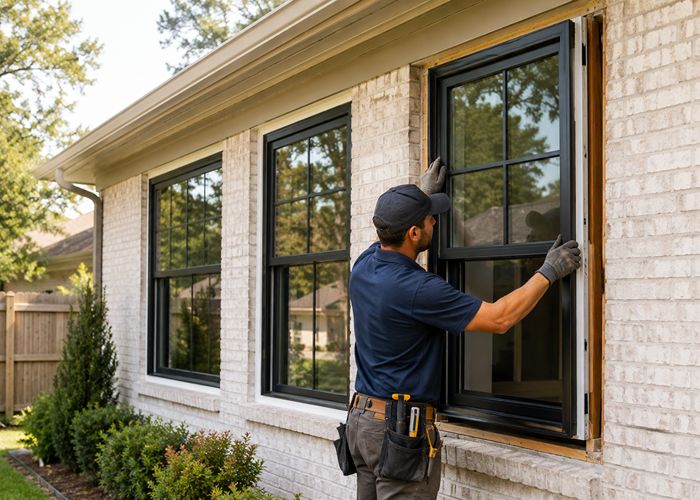
Insert window replacement, sometimes called a pocket replacement, involves sliding a new window directly into your existing frame. The old sash window is removed, but the surrounding frame, trim, and sill all stay in place.
This method works well when the existing frame is structurally sound, free of rot, and still square. It's a faster process, typically less disruptive, and usually carries a lower upfront expense. For Houston homeowners with older homes in good structural shape, this can be a practical and budget-friendly path forward.
The trade-off is that you're working within a smaller opening. Because the new window fits inside the existing frame, you lose a small amount of glass area and natural light. The window function stays intact, but the view gets slightly reduced.

Full-frame replacement means everything comes out - the sash window, the frame, the trim, and sometimes even portions of the surrounding siding. The opening is taken back to the rough framing construction in the wall, and a completely new window unit is installed from scratch.
This method is more involved. It requires more labor, materials, and a higher overall cost. But it also gives you a clean slate.
If your current frames are showing signs of water damage, rot, or structural failure, inserting a new window into a compromised frame is like putting new glass in a broken shell. Full-frame replacement eliminates that risk entirely.

This is where most guides fall short. They compare cost and aesthetics without explaining the underlying logic.
Your walls are speaking to you through visible clues. Here's how to read them:
The price gap between insert and full-frame replacement is real, but it reflects a difference in scope rather than quality.
The window material you choose also factors into the replacement method decision.
Both methods can come with strong warranty coverage, but the terms differ. Insert replacements often carry product warranties tied to the window unit itself. Full-frame replacements may include installation warranties that cover both the product and the surrounding work.
Always ask specifically what the warranty covers. A warranty that only protects the glass but not the installation or the seal at the frame level is worth a lot less than it sounds.
Choosing between full-frame and insert window replacement isn't about picking the cheaper or faster option - it's about matching the method to the actual condition of your home. If your frames are sound, an insert can be a smart, efficient upgrade. If your walls are telling a different story through rot, water damage, or shifting frames, full-frame replacement protects your home long-term. The team at Conservation Construction of Houston can walk through your options with you and give you an honest assessment.
Reach out at (281) 741-1041 to schedule your free estimate today.
For many years, windows were viewed simply as "the glass in the wall." However, in 2026, the industry has shifted. Windows are now seen as high-tech components of a home’s mechanical system. Whether you are looking to slash utility bills, boost your home’s market value, or finally eliminate that stubborn draft in the living room, upgrading your windows is one of the few home improvements that offers immediate daily benefits and a long-term financial payoff.
Here is why new windows are a premier upgrade for your home this year.
Energy costs continue to fluctuate, and modern window technology has stepped up to meet the challenge. The transition from single-pane to high-performance double or triple-pane units like the ones we sell at Conservation Construction can reduce heating and cooling loads by up to 40%.
If you’re planning to sell in the next few years, windows are a major "move-in ready" feature that buyers prioritize. According to recent 2026 market data, homeowners can expect to recoup roughly 67% to 72% of their investment in vinyl window replacements upon the sale of their home. Beyond the appraisal value, homes with new windows tend to sell faster because they signal to buyers that the property has been meticulously maintained.
There is a massive difference between a room that is "heated" and a room that is truly "comfortable." Old windows often create "cold spots" or drafts that make certain areas of a home unusable during extreme weather.
Windows are the "eyes" of your home. Upgrading to contemporary styles—such as slim-profile frames or large panoramic picture windows—can completely transform a dated exterior.
Final Thoughts
Please reach out to us today for a free quote for new home windows. We are happy to answer any questions that you have. Thank you for reading and we will see you next time.
Unpredictable winter weather has become more common across Texas, and recent cold snaps caught many homeowners off guard. If you suddenly felt cold air near window frames, noticed one room refusing to warm up, or saw condensation appear on or inside the glass, you’re not imagining it.
At Conservation Construction of Houston, we hear from homeowners every winter who say the same thing: “I never noticed this before the cold hit.” That’s because short freezes and sudden temperature drops make window problems much more noticeable, especially in homes designed for long cooling seasons rather than extended cold weather.
The good news is that most window issues exposed by a cold snap are common and fixable. The key is knowing what to check and when a simple repair is the right solution versus when energy-efficient windows in Houston are the smarter choice. A cold snap doesn’t create window problems. It reveals them.
When outdoor temperatures drop quickly, the difference between indoor warmth and outdoor cold increases fast. That contrast highlights air leaks around windows, weak seals, and older glass that struggles to insulate. Research from The Pennsylvania State University notes that windows lose more heat per square foot than other surfaces in a home, which is why problems often become more noticeable during sudden cold snaps.
In warmer months, those same windows might just cause glare or a slightly warmer room. During a freeze, they allow cold air to move inside more easily. That’s why cold air coming through windows often feels sudden, even if the underlying issue has been there for years.
Humidity also plays a role. Moist air trapped between panes or around frames reacts quickly to cold, leading to window condensation problems or foggy windows between panes.
This can indicate the need for a window assessment and ultimately, a window replacement for Houston homes.

Most people don’t jump straight to “my windows are failing.” What shows up first is the daily discomfort. Little things that are easy to ignore until a cold snap or windy night makes them obvious.
Here are the most common clues homeowners notice:
A cold snap makes these issues impossible to ignore because the temperature gap between inside and outside is suddenly much larger.

Before you assume you need replacement, you can do a few quick checks that help you figure out what’s actually happening. None require special tools. Just a little time and attention.
Pick a colder day or a windy morning. Slowly move your hand around the perimeter of the window, especially near the lower corners, meeting rails, and where the sash meets the frame.
If you notice:
These signs usually suggests air leakage. It also helps you pinpoint where the trouble spot is, which matters if the fix is as simple as sealing a gap.
The candle test for window drafts is an easy way to confirm air movement. Use a candle or incense stick and hold it a few inches from the frame (safely, away from curtains or anything flammable). Watch what happens.
This doesn’t tell you exactly why it’s leaking, but it’s a reliable way to confirm that the draft is real and not just “cold glass” making the area feel chilly.
Take a close look at the window on a cold morning. If you see foggy windows between panes and wiping doesn’t change anything, the moisture is inside the sealed glass unit. That’s typically a seal failure, meaning the window has lost part of what makes it insulating.
A simple way to tell the difference:
Operation matters more than people think. If the sash doesn’t sit tight, air can leak in even if the window “looks closed.”
Check for:
Those issues can create gaps that lead to windows letting cold air in, especially on gusty nights.

Not always. In some cases, loose weatherstripping, small gaps in caulking, or minor hardware adjustments can reduce drafts and improve comfort, especially if the issue is isolated to one window. Those fixes are worth exploring first before window replacement.
Problems start when the same cold air near windows shows up again each winter, seals have already failed, or multiple rooms struggle to stay comfortable during temperature swings. At that point, repairs tend to act as short-term patches rather than real solutions.
That’s when energy-efficient windows in Houston become important, because they address air leakage and insulation issues at the window itself instead of around it.
Today’s windows are designed to manage heat transfer and airflow much more effectively than older units. Tighter seals, improved frame construction, and insulated glass all work together to limit drafts and reduce temperature differences near the window.
Low-E glass helps reflect heat while still allowing natural light into the room. When these features are paired with proper installation, they help reduce cold snap home issues while also supporting comfort during long, warm seasons when solar heat gain becomes a bigger concern.
During a freeze, those improvements matter most because they slow heat loss instead of letting warmth bleed out through the glass and frame.
If drafts keep coming back, condensation shows up between panes, or certain rooms never seem to feel right, a professional evaluation can help clarify what’s actually happening.
A window assessment looks at sealing, glass condition, and installation factors to determine whether a simple fix is enough or if replacement is the more practical next step.
Homeowners can schedule a free consultation with Conservation Construction of Houston to have their windows evaluated and receive clear guidance on which options make sense for improving comfort and performance in their home.
When a window cracks, shatters, or gets damaged in a storm, many homeowners are left wondering, does home insurance cover window replacement? It’s a common question with answers that can vary depending on your policy, the cause of the damage, and a few other important factors. From a rogue baseball to high winds and falling tree limbs, the source of the break plays a big role in what your insurance might pay for and what it won’t. If you’re looking at broken glass and debating your next step, it’s worth getting informed before filing a claim or bringing in a contractor.
Wondering does home insurance cover window replacement? Discover 5 key facts every homeowner should know before filing a claim. Learn what's typically covered, common exclusions, and how a window contractor can help with inspections and insurance guidance.
In this blog, we’ll break down five key facts that can help you understand what to expect and how to move forward when facing window damage in your home.

Knowing what triggered the damage is the first step to figuring out if you're covered. Insurance companies make a clear distinction between everyday accidents and damage caused by specific events. That difference can mean the window replacement comes out of your pocket, or gets picked up by your policy.
When it comes to broken windows, how the damage occurred is a major factor in whether your home insurance will step in. Most standard homeowners insurance policies don’t cover accidental breakage, like a baseball through the glass, kids roughhousing inside, or a dropped ladder during home repairs. These situations usually fall outside the coverage bounds because they’re seen as avoidable incidents.
However, insurance policies often include protection against specific events known as “covered perils.” These are types of damage your provider agrees to cover under the terms of your policy. Common covered perils include:
Severe weather (such as windstorms or hail)
Fire and smoke
Theft or vandalism
Falling objects (like tree limbs during a storm)
If your window damage was caused by one of these events, your policy might cover repairs or full window replacement.

Here are a few examples where you might be able to file a claim for window replacement:
Hail or wind damage: Strong gusts or hailstones that crack or break glass.
Burglary or vandalism: If someone breaks in or intentionally destroys your windows.
Fire and smoke: Damage caused directly by flames or heat, or from firefighting efforts.
Each of these is usually considered a covered peril, making it more likely that it will qualify for replacement coverage under a standard homeowner's policy.
Not every homeowner’s insurance policy covers window replacement in the same way. What one policy includes, another might leave out entirely. That’s why it’s important to look at your coverage type before assuming a broken window is a covered expense.
Basic homeowners insurance, often called an HO-1 policy, offers limited protection and only covers a short list of named perils. If the cause of your window damage isn’t specifically listed, it likely won't be covered. On the other hand, a more comprehensive policy like HO-3 or HO-5 tends to offer broader protection and may cover a wider range of unexpected events, depending on your provider and the fine print.
Some key differences between policy types include:
Named vs. open perils: Basic plans only protect against listed threats, while broader policies may contain all risks unless explicitly excluded.
Dwelling vs. personal property coverage: Where the damage occurs and how it’s classified can affect whether it’s covered.
Understanding what level of protection your plan offers is essential to knowing where you stand with a potential claim.
Even comprehensive coverage doesn’t mean everything is included. Exclusions, limitations, and conditional clauses are common in homeowner policies, and they often hide in the fine print.
Language like "maintenance-related damage," "neglect," or "normal wear and tear" could leave you footing the bill for a broken window, especially if the damage appears avoidable or due to age.
Call your insurance agent for clarification if you’re unsure what your policy includes. A quick conversation can save you time, money, and the frustration of a denied claim.
Before you assume insurance will foot the bill for a broken window, it's important to look at your deductible. Many homeowners don’t realize that the cost to replace a window might fall below their deductible, making a claim more of a hassle than help. That’s where talking to a window replacement expert can make all the difference. Getting an upfront quote can help you decide the smartest route forward.

If your deductible is $1,000 and the window replacement costs $800, you’ll end up paying the full amount out of pocket, even if the damage is technically covered. Filing a claim only makes financial sense if the repair cost is significantly higher than your deductible. A general rule of thumb:
Many reputable window companies can provide free estimates, so you’ll know exactly what you're working with before involving your insurance provider.
Filing too many claims, even small ones, can come back to bite you. Insurers may raise your rates or flag your account as higher risk. Some may even deny renewal if there are too many claims on your record.
If the window damage isn’t widespread or part of a major event like storm damage, you might be better off paying out of pocket and avoiding the claim altogether. For homeowners trying to keep premiums low, a direct replacement from a trusted local window contractor is often the most practical choice.
The scale and severity of the damage play a big role in how insurance providers respond to window replacement claims. One cracked window from flying debris may not raise eyebrows, but several shattered panes after a major storm? That’s a different story.
Insurance companies are typically more responsive when damage affects multiple areas of your home. If several windows are broken during a storm, your claim may carry more weight and be taken more seriously. In these cases, the overall cost often exceeds the deductible, and the damage is clearly linked to a covered peril, making it easier to get approved.
Common examples of larger-scale window damage that may qualify:
For storm-related damage, it’s smart to have a window replacement contractor inspect the property thoroughly. A professional assessment can help support your claim and provide documentation if your insurer requests it.
Not all window issues are viewed equally by insurers. A minor chip or cosmetic flaw may not be considered claim-worthy, especially if the window still functions properly. But damage that compromises the structure, like a broken seal, shattered glass, or bent frame, could be seen as a risk to your home’s safety and security.
Structural damage often signals a need for full replacement, and that’s where a skilled window contractor comes in. By identifying whether the damage is surface-level or deeper, we can guide you on the best next steps and help you decide if it’s worth filing with your insurance.
When a window breaks, it’s more than just a cosmetic issue; it’s an open invitation for water, pests, and even intruders. Taking quick action to protect your home isn’t just a smart move, it could also help your insurance claim. Many policies will reimburse you for reasonable temporary repairs, as long as they prevent further damage and are properly documented.
If your window gets shattered during a storm or break-in, leaving it open to the elements can worsen the situation. Rain, wind, or even animals can cause secondary damage that your insurance company may refuse to cover if you didn’t act to secure the area. Placing a tarp, boarding up the window, or calling a window company for emergency repair can show your insurer that you took responsible steps to protect your home.
Prompt action demonstrates that the damage didn’t grow due to neglect, and that matters when your claim is under review.
To qualify for reimbursement, keep track of everything. Here’s what to save:
When it's time to submit your claim, having clear documentation can speed up the process and increase your chances of getting those temporary repair costs covered. If you’re unsure what’s worth documenting, your local window specialist can help you gather the right details.
While home insurance can be a financial safety net after sudden damage, it doesn't cover everything. In many situations, a window issue might fall outside your policy's protection, leaving you responsible for the full cost. Understanding the most common exclusions can help you avoid surprises and plan accordingly if you need repairs.
Even with a solid policy, there are several reasons why a window replacement claim might be denied. Most often, the issue comes down to how and why the damage occurred. Here are a few scenarios that usually aren’t covered:
In short, if the damage didn’t result from a sudden, external event, you may be out of luck with insurance.
Even if your claim is denied or not worth filing, it’s still important to address the problem. Letting a broken or deteriorating window sit can lead to water intrusion, drafts, rising energy bills, or pest problems. That’s where working directly with a professional window replacement company comes in.
Getting a quote gives you:
Many contractors also offer financing or flexible options, making it easier to move forward, even without insurance coverage.
When you're faced with a broken or damaged window, your first call might be to your insurance company, but your second call should be to a window replacement professional. A trusted contractor doesn’t just install new glass, they help you make sense of the entire situation, from assessing the damage to guiding you through the next steps.
One of the most valuable services a window contractor offers is a detailed inspection. They know what signs to look for, how to determine if the damage is structural or cosmetic, and whether it likely falls under the umbrella of a covered insurance claim. Their trained eye can uncover hidden issues that might not be obvious, like:
This kind of professional assessment provides documentation and insight that can support your claim or help you decide if insurance is even worth pursuing.
Some window replacement companies go a step further and assist homeowners directly during the claims process. This can include:
Having a contractor involved adds credibility to your claim and can streamline the process by reducing back-and-forth between you and your provider. If your windows were damaged in a storm or break-in, a contractor experienced with insurance claims can be a key partner in getting your home and your peace of mind restored faster.

Filing a home insurance claim sounds straightforward, but jumping into the process too quickly can lead to delays, denials, or unnecessary out-of-pocket costs. Before contacting your insurance company, take a few practical steps that can save time, reduce stress, and help you make a more informed decision about how to move forward.
The very first thing you should do is contact a trusted window replacement company for an estimate. Why? Because the cost to replace a window might be lower than your deductible, which means filing a claim wouldn't result in any payout and could still affect your insurance history.
A professional estimate will:
Many contractors offer free quotes, so there’s no risk in getting one before making any big decisions.
Once you have a repair estimate, it’s time to pull out your homeowners insurance policy and check the details. You’ll want to confirm:
If the terms aren’t clear, it’s worth giving your insurance provider a quick call. By comparing your situation to the fine print, you can avoid wasted time and steer your repair process in the right direction, whether it involves a claim or a direct contractor quote.
Dealing with a broken window is stressful enough without the added confusion of figuring out what your insurance will or won’t cover. Every policy is different, and the outcome depends on a few key factors: what caused the damage, how extensive it is, and whether the cost goes beyond your deductible. Taking the time to understand your coverage and getting the right expert on your side can make all the difference.
If you're unsure about your next step, don't go it alone. At Conservation Construction of Houston, we specialize in high-quality window replacement and are here to help you every step of the way. Whether you need an honest inspection, a free quote, or help navigating the insurance process, our experienced team has you covered.
Reach out today to schedule a consultation and let us help restore comfort, efficiency, and security to your home.
