Replacing an exterior door starts with something much less exciting than choosing glass, color, or hardware: getting the measurements right. For homeowners, accurate sizing also matters because a properly fitted entry system helps keep heat, humidity, rain, and outdoor air where they belong.
To learn how to measure for an exterior door, measure the width and height of the existing opening in several places and use the smallest measurements. For a complete prehung replacement, you may also need the rough opening, jamb depth, swing direction, and existing trim dimensions.
Knowing which measurement you're taking is just as important as knowing the number. A door slab, prehung unit, finished opening, and rough opening are not necessarily the same size.

Before pulling out the tape measure, determine what you're actually planning to replace.
If you're replacing only the slab, you need measurements of the existing door itself. If you're replacing the complete entry system, the installer needs information about the frame and opening as well.
A basic measurement starts with width and height.
For width, take measurements across the opening near the:
For height, measure vertically on more than one side of the opening.
Use the smallest measurement rather than assuming the opening is perfectly square. Older openings can shift slightly over time, and even a small difference can affect how the replacement fits.
You should also note the jamb depth, threshold, sidelites, transoms, and swing direction if they are part of the existing entrance.
Therma-Tru's entry door measuring guidance similarly calls for homeowners or installers to record the width, height, jamb width, door type, handing, swing, sidelites, and transom configuration when planning a complete replacement.
The goal isn't simply to find a number that looks close. How to measure for an exterior door depends on knowing which part of the assembly that number describes.
If you're researching how to measure a door opening, start with the finished opening you can see.
Measure across the opening in several places because the width may not be identical from top to bottom. Then measure the height on the left and right sides.
Don't assume that a door labeled 36 inches wide means every part of the installed system measures exactly 36 inches.
Door terminology can create confusion here because several dimensions may come up during a replacement project:
These measurements relate to each other, but they aren't interchangeable.
Your existing entry may also include a sidelite, double door, transom, unusually thick wall, or custom trim configuration. Those features change what you need to measure.
You can take basic measurements yourself to get a general idea of the opening size, but a professional should confirm the final measurements before you order a replacement door. Exterior door sizing can involve the slab, frame, rough opening, jamb depth, threshold, swing direction, and other details, so even a small measurement error may create fit, sealing, or installation problems.
The rough opening is the framed wall opening behind the finished door frame and trim.
Understanding how to measure rough opening for an exterior door therefore requires access to the framing itself. In an existing home, that can mean removing interior casing so the studs and header can be seen.
For the width, measure from the inside face of one framing stud to the inside face of the opposite stud.
For the height, measure from the subfloor or structural floor surface to the bottom of the header.
ProVia's measuring instructions recommend checking the width directly between the framing members and measuring the height from the subfloor to the header.
Why does that matter?
The rough opening needs enough room for the complete door unit to be positioned, leveled, plumbed, and secured. The frame cannot simply be forced into an opening that is too tight.
A professional will also look for more than dimensions. The condition and shape of the opening matter.
Potential concerns include:
For homes, moisture around an exterior entrance deserves particular attention. Heavy rain and humid conditions can expose weaknesses around an older door system, so measuring the opening is also an opportunity to look at what is happening around it.

The prehung vs slab exterior door decision determines how much of the existing entrance is replaced.
A door slab is essentially the door itself. It does not automatically replace the surrounding frame, jambs, threshold, or other parts of the entry system.
A prehung door comes fitted into its own frame. The system typically brings the slab, jambs, hinges, threshold, weatherstripping, and related components together as a unit.
ProVia describes its prehung exterior doors as complete systems that include components such as the frame, threshold, sweep, weatherstripping, and hardware preparation.
A slab can make sense when the existing frame is in excellent condition, and the new door can be fitted correctly into it.
A prehung replacement is usually worth considering when:
When comparing a prehung vs slab exterior door, think about the condition of the complete opening rather than the price of the door panel alone.
Trying to fit a new slab into an old, damaged frame can leave the original problems in place.
Conservation Construction of Houston's door replacement services include ProVia entry systems with fiberglass and steel options, including Ascent, Signet, and Legacy doors.

A standard exterior door size is usually expressed using the nominal size of the door slab rather than the exact dimensions of every part of the assembled unit.
A 36-inch-wide by 80-inch-high single door is one very common exterior configuration. Other widths and heights are available depending on the manufacturer, house, and entry design.
ProVia's current sizing information, for example, lists single-door widths including 30, 32, 34, 36, and 42 inches, along with several available heights.
That doesn't mean every entry was built around today's most common dimensions.
You may find:
The standard exterior door size therefore gives you a starting point, not an ordering measurement.
If your current door measures close to a familiar size, resist the temptation to buy based on that measurement alone. You still need to know the dimensions of the unit or rough opening required for the product you're installing.
A measurement error can create more than an installation inconvenience.
An exterior door needs to sit correctly within the opening so the frame, threshold, weatherstripping, slab, and hardware can perform as intended.
A poorly fitted system may contribute to:
Those issues matter where exterior entrances routinely separate an air-conditioned interior from high outdoor heat and humidity.
Even a high-quality door still depends on being matched and installed correctly for the opening.
Learning how to measure for an exterior door can help you understand your current opening, but the final measurements should match the exact replacement system being ordered.
At Conservation Construction of Houston, we measure the opening and help you compare fiberglass and steel entry doors, glass options, finishes, hardware, sizes, and configurations for your home. If your existing frame is damaged or you're unsure about a prehung vs slab exterior door, we can also explain what makes sense based on the condition of the complete entrance.
Explore our entry door options or schedule a consultation for your door replacement project.

When learning how to measure for an exterior door, start by measuring the width in several places and the height on more than one side. Use the smallest measurements. For a complete replacement, you'll also want information about the rough opening, jamb depth, handing, swing direction, threshold, and any sidelites or transoms.
When figuring out how to measure a door opening, take more than one width and height measurement rather than relying on a single point. Using the smallest dimension helps reveal variations in the opening. A professional installer can also check the opening for level, plumb, and square before the replacement is ordered.
To understand how to measure rough opening for an exterior door, the finished trim may need to be removed so you can reach the framing. Measure the width from stud to stud and the height from the structural floor or subfloor to the bottom of the header. The rough opening is larger than the slab because it must accommodate the complete door unit.
Yes, 36 by 80 inches is a common standard exterior door size for a single entry door, but it isn't the only size available. Manufacturers offer additional widths, heights, double-door systems, sidelites, transoms, and custom configurations. Measure the actual opening before choosing a replacement.
The prehung vs slab exterior door decision depends largely on the condition of the existing frame. A slab may work when the frame, jambs, threshold, and alignment remain in good condition. If those components are damaged, worn, or out of square, replacing the complete prehung system may provide a better solution.
Accurate measurements are the first step toward an exterior door that fits, operates, and seals properly. At Conservation Construction of Houston, we can measure your existing opening, walk you through your replacement options, and help you choose a new entry door that fits your home and style.
Ready to get started? Contact Conservation Construction of Houston to schedule your consultation.
When you're replacing an entry door or trying to figure out why your current one sticks, sags, or won't latch correctly, you'll quickly run into terms like jamb, frame, handing, and hinge side. Knowing what is a door jamb can make it much easier to understand what's happening with your Houston home's exterior door.
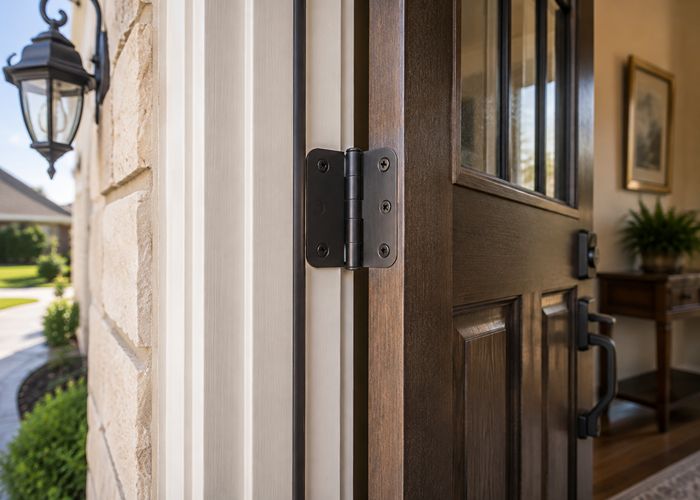
What is a door jamb? A door jamb is part of the frame surrounding a door. The side jambs run vertically along the opening, with one supporting the hinges and the other providing the area where the latch and deadbolt meet the strike plate.
Once you understand the jamb, the rest of your door's anatomy becomes much easier to follow.
One of the easiest door terms to mix up is what is a door jamb vs door frame. They're closely related, but they aren't exactly the same thing.
The door frame refers to the larger structure surrounding and supporting the door. The jambs are individual parts of that frame.
Look at an open exterior door, and you'll generally see a vertical jamb on either side and a horizontal piece across the top. The hinge-side jamb provides the mounting surface for the hinges. On the opposite side, the strike jamb contains the strike plate where your latch and deadbolt engage.
So, what is a door jamb responsible for? It plays several roles in the operation of your entry door:
A problem with the jamb can therefore look like a completely different door problem. If the hinge-side jamb shifts, for example, the latch on the other side may suddenly stop lining up with its strike plate.
That's one reason it's useful to look at the entire opening rather than assuming a sticking or sagging door only needs a hardware adjustment.
If you're wondering what are the parts of a door jamb, it helps to think of the jamb as part of a larger system rather than one simple strip of material.
Here are several terms you may hear when discussing the opening:
You'll also hear terms such as threshold or sill. These refer to components at the bottom of an exterior doorway and aren't the same as the vertical jambs.
Knowing these basic parts can make conversations about repairs or replacement much clearer. Instead of simply knowing that "something around the frame is damaged," you can better understand which component is causing the trouble.
Door jamb hinges connect the moving door slab to the stationary frame. One leaf of each hinge attaches to the door while the other is secured to the hinge jamb.
That sounds simple, but those relatively small pieces of hardware support the weight and repeated movement of the door.
Exterior entry doors can be heavy, especially when they include fiberglass or steel construction, decorative glass, reinforced components, or other features. Each time the door opens, the hinges and the jamb supporting them have to keep that weight properly positioned.
Problems may become noticeable when you see:
Sometimes the problem is minor hardware movement. Other times, damaged material around the hinge attachment means the jamb can no longer provide the support it once did.
Our entry doors in Houston are installed as complete systems so the door, jambs, frame, hinges, weatherstripping, and threshold work together.

Once you start shopping for a new door, another term you're likely to encounter is door handing.
Comparing a left-hand vs right-hand door tells you where the hinges are positioned and how the door swings. This matters because a replacement entry door has to be configured for the opening and intended swing direction.
The terms can seem unnecessarily complicated until you look at an actual doorway.
One common method for how to tell if a door is right-handed or left-handed is to stand on the side where the door swings toward you.
Look at which side contains the hinges.
You'll also need to account for whether the door swings into or out of the home.
Manufacturers and installers may use specific handing terminology based on the direction from which the door is viewed, so don't rely on a guess when ordering a replacement. A professional installer can determine the handing while measuring the opening.
Why does this matter?
The wrong configuration can put the hinges, handle, lock, and swing direction on the wrong sides. It can also affect how comfortably the door works with nearby walls, furniture, switches, steps, or other features around the entrance. Handing, along with the inswing and outswing, should be confirmed before ordering the replacement door.
Understanding what is a door jamb also means recognizing that exterior jambs are part of an opening exposed to changing outdoor conditions.
Houston brings plenty of heat, humidity, rainfall, and severe weather. The National Weather Service's Houston climate information provides long-term local temperature and precipitation records that illustrate the conditions exterior building materials experience throughout the year.
Moisture can be particularly important around an exterior opening. If water repeatedly reaches vulnerable or inadequately protected material, the jamb or surrounding components can eventually deteriorate. Some materials may also expand and contract as environmental conditions change.
The house itself can move over time, too. Small changes around the opening can affect the relationship between the slab, hinges, jamb, threshold, and lock hardware.
That's why a door that suddenly starts sticking doesn't automatically have a bad hinge.
A professional may look at:
The goal is to find out why the door stopped operating correctly before deciding what needs to be repaired.

Not necessarily.
If a hinge simply loosened and the surrounding material is still in good condition, an adjustment or minor repair may solve the problem.
More extensive damage deserves a closer look.
Watch for a jamb that is cracked, split, soft, visibly deteriorated, or pulling away around the hinges. You should also pay attention when the same adjustment needs to be made repeatedly.
A larger problem may be present when you have several symptoms at once, such as:
In those cases, repairing one part may not address the condition of the overall door system.
A complete pre-hung replacement includes a door slab already fitted within its frame. That gives you new jambs, hinges, weatherstripping, and related components designed to function together instead of trying to fit a new slab into a worn or damaged opening.
The best option depends on how much of the opening is affected.
An isolated issue with an otherwise solid door and frame may be worth repairing. If the door itself is old and you're already dealing with worn weatherstripping, damaged jambs, alignment problems, or poor performance, replacement may offer a more complete solution.
Conservation Construction of Houston provides professional door replacement and installation in Houston with fiberglass and steel entry door options designed for exterior use.
During the process, we can look at the complete opening rather than treating the visible symptom as the only problem. That includes measurements, swing direction, left-hand vs right-hand door configuration, frame condition, and the way the new entry system needs to fit your home.
For Houston homeowners dealing with an entry door that has become difficult to use, understanding the terminology is a helpful first step. The next is figuring out which part actually needs attention.
Reach out to Conservation Construction of Houston for support and to discuss your entry door project and explore your replacement options.

A door jamb is part of the frame surrounding the door slab. The vertical hinge jamb supports the hinges, while the jamb on the opposite side provides the area where the latch and deadbolt engage. A horizontal head jamb runs across the top.
The frame is the complete structure surrounding and supporting the door, while the jambs are components of that frame. In everyday conversation, people sometimes use the terms interchangeably, but technically they describe different things.
The main jamb sections are the hinge jamb, strike jamb, and head jamb. The complete assembly also works with hinge mortises, a strike plate, door stop, weatherstripping, threshold, and other components that help the exterior door close and seal correctly.
When learning how to tell if a door is right-handed or left-handed, stand where the door swings toward you and look at the hinges. Hinges on the left generally indicate a left-hand door, while hinges on the right generally indicate a right-hand door. Because terminology can vary based on swing direction and manufacturer, have the handing confirmed before ordering a replacement.
Loose hinges are one possibility, but the cause may also involve damaged jamb material, frame movement, moisture deterioration, or changes elsewhere in the opening. If adjustments don't last, inspecting the complete door system can help identify the underlying problem.
Knowing what is a door jamb, how door handing works, and how the hinges connect to the frame can make it easier to spot when something is no longer working as it should. If your Houston entry door sticks, sags, lets in drafts, or has a damaged frame, Conservation Construction of Houston can help you determine if it is time for a replacement. We install complete entry door systems designed to fit the opening properly and provide dependable everyday performance.
Ready to take a closer look at your entry door? Contact us today to schedule your free consultation.
Doors are more than just entryways; they are critical barriers that offer privacy, climate control, and, most importantly, security. While we often focus on the lock or the material of the door itself, an often-overlooked yet vital component that significantly enhances a door's performance and longevity is the strategic incorporation of steel plates. These seemingly minor additions play a major role in both the durability and security of a door, from bustling commercial buildings to residential homes.
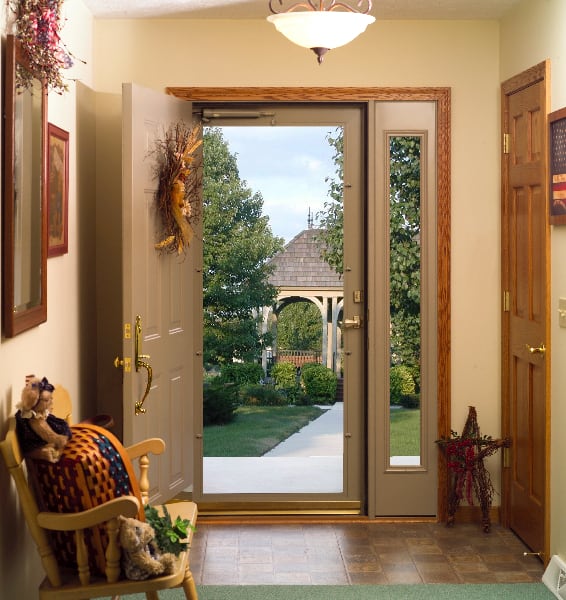
When we talk about steel plates in doors, we're not just referring to a single, universal application. Our entry doors have a very specific application. We sell ProVia Doors. ProVia Legacy steel doors incorporate steel plates for enhanced security, particularly at the lock and deadbolt area. These plates are made of 20-gauge steel, providing added strength and making it more difficult to kick in the door. The plates also reinforce the structural integrity of the door, especially in the areas where it's most vulnerable to forced entry.
The presence of steel plates in exterior doors offers a multitude of benefits, making them crucial for both practical use and enhanced security:
In conclusion, steel plates in doors are far more than mere decorative elements. They are robust, functional components that significantly contribute to a door's durability, security, and overall performance. From safeguarding against everyday wear and tear to providing a crucial line of defense against intruders, the strategic integration of steel plates ensures that our doors remain strong, reliable, and effective barriers for years to come. If you need a new front door you can reach out to Conservation Construction today for your free quote.
Your front door. It's more than just an entryway; it's a statement, a security barrier, and a crucial element of your home's curb appeal and energy efficiency. But have you ever stopped to consider the individual parts that work in harmony to make it all function? Let's take a closer look at the key components that comprise your front door.
This is the most obvious part – the solid or paneled structure that swings open and closed. Door slabs come in a variety of materials, each with its own characteristics:

The frame is the stationary structure that surrounds and supports the door slab. It's typically made of wood, vinyl,and consists of several key parts:
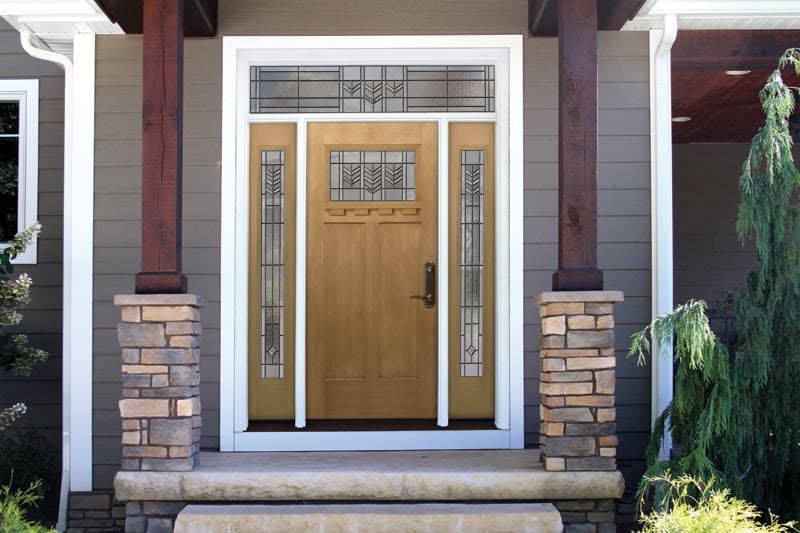
These are the moving parts and accessories that allow you to operate and secure your door:
These components are crucial for energy efficiency and protecting your home from the elements:
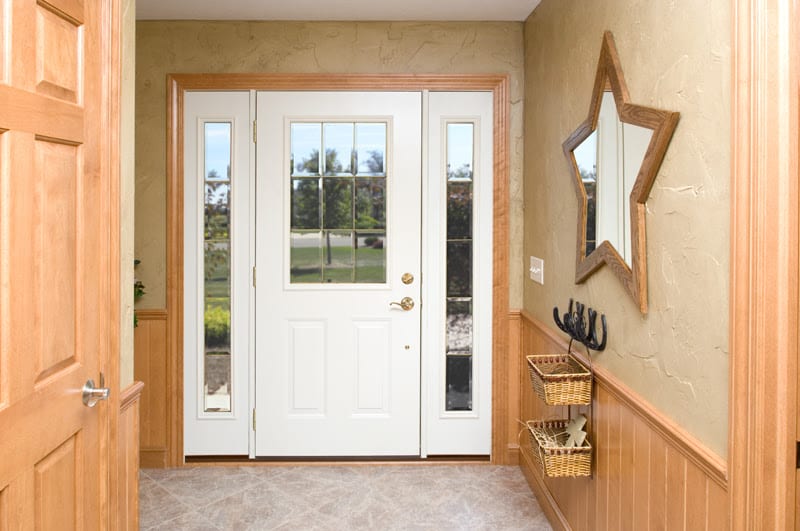
While not strictly functional, these elements enhance the aesthetic appeal of your front door:
Understanding the anatomy of your front door can help you appreciate its functionality, identify potential issues, and make informed decisions when it comes to maintenance or replacement. Each component plays a vital role in creating a secure, energy-efficient, and welcoming entrance to your home. If you need a new Front Door you can reach out today for your free quote and 25% off a new front door.
Think about the homes you admire. Chances are, the front door plays a significant role in that admiration. A new front door can instantly transform the look of your house, boosting its curb appeal and potentially even its value. Whether you're aiming for a modern, sleek statement or a cozy, welcoming vibe, the right door can make all the difference.
While looks are important, a new front door offers so much more than just a pretty face. Modern doors come packed with features designed for enhanced security, energy efficiency, and durability.
The options for new front doors are seemingly endless, which can be both exciting and a little overwhelming. Let's explore some popular choices:
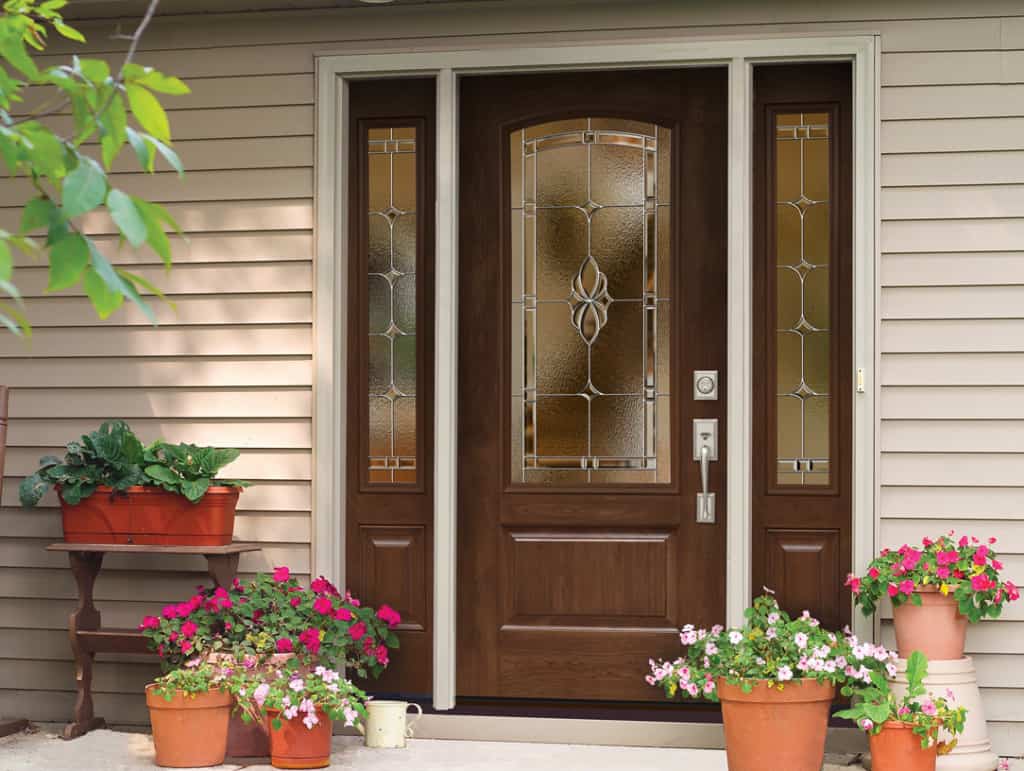
Beyond the material, you'll also encounter a wide array of styles to complement your home's architecture, from traditional raised panels to contemporary sleek designs. Don't forget to consider hardware finishes, sidelites (the vertical windows beside the door), and transoms (the window above the door) to further personalize your entryway. We can help you design all of these features in a new door when you consult with one of our experts!
Choosing a new front door is a significant decision. Here are a few things to consider:
Proper installation is crucial for security, energy efficiency, and ensuring the door operates smoothly. A professional installer will have the expertise and tools to get the job done right. At Conservation Construction our experts have the skills needed to install your door the right way.
A new front door is an investment that can enhance your home's beauty, security, and energy efficiency. By carefully considering your needs and exploring the vast array of options available, you can find the perfect door to welcome you home for years to come. So go ahead, give your entryway the upgrade it deserves and contact us today for your free quote.
Your front door is more than just an entryway; it's the welcoming handshake of your home, the first impression it makes on visitors and passersby. While sleek modern designs have their appeal, consider adding a touch of timeless elegance and unique character with a stained glass front door. It's an option that offers a delightful blend of beauty, privacy, and a personal artistic statement.

One of the most immediate draws of stained glass is its visual appeal. The interplay of colored glass, often arranged in intricate patterns or depicting captivating scenes, transforms ordinary sunlight into a kaleidoscope of hues dancing across your entryway. Imagine the warm glow of amber and ruby tones gracing your foyer in the morning, or the cool serenity of blues and greens filtering through in the afternoon. This dynamic display adds an ever-changing element of beauty to your home's interior.

Beyond aesthetics, stained glass offers a valuable degree of privacy without sacrificing natural light. Unlike solid doors that block light entirely, or clear glass that leaves your home exposed, stained glass obscures direct views from the outside while still allowing daylight to stream in. The level of privacy can be tailored to your preferences through the complexity of the design and the opacity of the glass used. This means you can enjoy a bright and airy entrance hall without feeling like you're living in a fishbowl.

Furthermore, a stained glass front door is a wonderful way to inject personality and artistic flair into your home's facade. Whether you choose a traditional Victorian motif, a bold Art Deco design, or a custom piece reflecting your own interests and style, stained glass becomes a unique focal point. It speaks volumes about your taste and attention to detail, setting your home apart and creating a memorable entrance for guests.

The craftsmanship inherent in stained glass adds another layer of value. Each piece is carefully cut, and fitted, resulting in a durable and enduring work of art. Art Glass offers you an opportunity to create a unique artistic statement using design and color. With our line of front doors you can get decorative glass that truly reflects your personality.
Finally, consider the enhanced curb appeal a stained glass front door provides. It elevates the overall look of your home, adding a touch of sophistication and charm that can significantly enhance its market value. It's a feature that potential buyers often find particularly appealing, suggesting a home that has been lovingly cared for and possesses unique character.

In conclusion, choosing a front door with stained glass is an investment in beauty, privacy, and personal expression. It's a chance to infuse your home with color, light, and a touch of artistry that will be enjoyed for years to come. So, why not let your light shine and welcome the world with the timeless elegance of stained glass? If you would like to get a free quote for a new Front Door with Stained Glass please reach out to us today.
Homeownership is a rewarding experience, but it also comes with ongoing expenses. One of the most significant can be energy costs, especially with fluctuating temperatures. However, smart homeowners are realizing that investing in quality exterior products like windows, siding, and doors isn't just about curb appeal – it's a strategic move that can significantly reduce energy consumption and save you money in the long run.
Here's how these exterior upgrades act as your home's energy-saving superheroes:
Old or inefficient windows are notorious for being energy drainers. They can be single-paned, poorly sealed, or made with outdated materials, allowing significant heat transfer in both summer and winter. Upgrading to modern, energy-efficient windows offers a multitude of benefits:
The Savings: By installing energy-efficient windows, you can see a noticeable decrease in your heating and cooling bills. The exact savings will depend on your climate, the efficiency of your old windows, and the type of new windows you choose, but it can be a substantial long-term investment.
While often thought of for its aesthetic value, your home's siding plays a crucial role in energy efficiency. Quality siding provides an extra layer of insulation and protection against the elements:
The Savings: Insulated siding like the types we sell at Conservation Construction can significantly reduce heat loss and gain through your walls, leading to lower heating and cooling costs. It also protects your home from costly structural repairs caused by weather damage, indirectly saving you money.
Exterior doors, just like windows, can be significant sources of energy loss if they are old, warped, or poorly insulated. Upgrading to energy-efficient doors can make a big difference:
The Savings: Replacing drafty or poorly insulated doors can significantly reduce heat loss and gain, leading to lower heating and cooling bills. A well-sealed door also improves overall comfort and prevents cold spots or drafts near entryways.
In Conclusion:
Investing in energy-efficient exterior products like windows, siding, and doors is a smart way to reduce your energy consumption, lower your utility bills, and create a more comfortable and sustainable home. By sealing leaks, improving insulation, and blocking unwanted heat transfer, these upgrades work silently and effectively to save you money while enhancing the beauty and functionality of your property. So, take a look at your home's exterior – it might just be the key to unlocking significant energy savings. If you would like to get a free quote for a new exterior product please contact us today.
The front door lock. It's something we take for granted, yet it stands as the first line of defense for our homes and families. But have you ever stopped to think about the long and fascinating history behind this ubiquitous piece of hardware? From simple wooden contraptions to sophisticated biometric systems, the evolution of the front door lock is a testament to human ingenuity and our enduring need for security.
The story of the front door lock begins thousands of years ago in ancient Egypt. Around 4000 BC, the Egyptians developed a basic but ingenious wooden pin lock. This device consisted of a wooden bolt attached to the door and a corresponding slot in the door frame. The bolt contained several wooden pins that could only be lifted by a specially designed large wooden key, essentially a giant toothbrush-like contraption. While rudimentary by today's standards, this invention laid the foundation for all future lock designs.
The Romans, known for their engineering prowess, further refined the Egyptian pin lock. They utilized metals like bronze, silver, and even gold to create more durable and ornate locks. These locks, often symbols of wealth and status, were primarily found in the homes of the affluent. The use of metal allowed for smaller, more intricate mechanisms, paving the way for future advancements.
The Middle Ages saw a decline in the sophistication of lock technology. With widespread conflict and instability, security focused more on physical barriers like heavy doors and fortified gates. Locks were less common, and many homes relied on simple bolts or bars for security. However, this period also saw the development of the "warded lock," which used obstructions or "wards" inside the lock to prevent unauthorized keys from opening it.
The Renaissance marked a resurgence in lock development. As trade flourished and personal wealth increased, the demand for more secure locks grew. This era saw the introduction of new materials and designs, including the "lever tumbler lock," which used a series of levers to block the bolt. This design, patented by Robert Barron in 1778, became the standard for secure locks for centuries to come.
The Industrial Revolution revolutionized lock manufacturing. Mass production techniques made locks more affordable and accessible to the general public. New materials, such as steel and cast iron, further enhanced the durability and security of locks. This period also saw the emergence of renowned lock makers like Jeremiah Chubb and Linus Yale Sr., whose innovations led to the development of modern lock mechanisms.
The 20th and 21st centuries have witnessed an explosion in lock technology. The invention of the "pin tumbler lock" by Linus Yale Jr. in the mid-1800s provided a compact and highly secure mechanism that is still widely used today. The latter half of the 20th century saw the introduction of electronic locks, keypad locks, and eventually, biometric locks that use fingerprints or other unique identifiers for access.
Today, front door locks are evolving at an unprecedented pace. The rise of smart home technology has led to the development of locks that can be controlled remotely via smartphones, integrated with home security systems, and even respond to voice commands. As technology continues to advance, we can only imagine the innovative and secure lock designs that await us in the future. At Conservation Construction we have a wide array of front door locks including push buttons and traditional locks. You can get just the right lock for your new front door!
Final Thoughts
From the basic wooden pin locks of ancient Egypt to the sophisticated biometric systems of today, the history of front door locks is a reflection of our enduring quest for security and peace of mind. As we continue to innovate and adapt to new challenges, the front door lock will undoubtedly remain a crucial guardian of our homes and families for generations to come. If you would like to know more about our front door locks, or are in need of a new front door, you can contact us today for your free quote. Thank you for reading today’s article and we can’t wait to hear from you!
Front doors are more than just a way to enter your home; they're a statement piece that sets the tone for your entire house. While color and hardware choices are important, embossing can add a unique touch of elegance and sophistication.
Embossing is a process that creates a raised design on a surface. In the context of front doors, it involves pressing a pattern onto the door's surface, resulting in a three-dimensional effect. This can be done on various door materials, including steel and fiberglass.
The embossing process typically involves using a die, which is a metal plate with the desired pattern engraved on it. This die is pressed onto the door's surface, creating the raised design. The depth and complexity of the embossing can vary depending on the die and the material of the door.
Enhanced Aesthetics: Embossing adds visual interest and depth to your front door, making it a focal point of your home's exterior.
Increased Curb Appeal: A beautifully embossed door can significantly boost your home's curb appeal, making it more attractive to potential buyers and visitors.
Customization Options: Embossing offers a wide range of design possibilities, from classic patterns to modern geometric shapes. You can even create custom designs to match your home's architectural style. You can speak with one of our experts today for a free quote and design your door from the ground up.
Added Value: A well-crafted embossed door can increase the value of your home by adding a touch of luxury and sophistication.

Raised Panel: This classic style features raised rectangular panels, often found in traditional or colonial-style homes.
Decorative Patterns: Embossing can be used to create intricate patterns, such geometric shapes to your liking.
When selecting an embossed front door, consider the following factors:
Material: Choose a door material that complements your home's style and offers the desired level of durability and security. Our steel and fiberglass doors have different beneficial properties and you can choose the material which compliments your home best.
Design: Select an embossing pattern that matches your personal taste and the architectural style of your home.

Embossing is a fantastic way to elevate the look of your front door and make a lasting impression. With a wide range of designs and materials to choose from, you can find the perfect embossed door to enhance your home's curb appeal and reflect your unique style. Contact us today for your free quote.
Replacing your front door is one of the simplest yet most impactful upgrades you can make to your home. Whether you want to improve curb appeal, boost energy efficiency, or enhance security, a new front door offers numerous benefits.
Your front door is the first thing people see when they approach your home, setting the tone for the rest of the house. A stylish, well-maintained door can instantly elevate your home’s exterior, giving it a fresh, welcoming look. With various designs, colors, and materials, you can select a door that reflects your style while increasing the overall aesthetic value of your property.
Older front doors, especially poorly insulated or damaged ones, can lead to drafts, heat loss, and increased energy bills. Our modern front doors with energy-efficient features, such as insulated cores or weather stripping, can help regulate indoor temperatures and reduce heating and cooling costs. This makes a new front door a smart long-term investment for your home.
A worn-out or weak front door can compromise the safety of your home. Upgrading to a sturdier, more secure door, made from materials like steel or fiberglass (which we sell at conservation construction), can provide better protection against break-ins. Our front doors have enhanced steel plating and advanced locking systems for added peace of mind.
A new front door can increase the market value of your home. When potential buyers see a fresh, attractive entryway, they’re more likely to view the entire property positively. In fact, studies have shown that replacing your front door can deliver one of the highest returns on investment compared to other home improvement projects.
If your current door is wooden, it may require frequent sanding, painting, or sealing. Fiberglass or steel are far more durable and require little maintenance, helping you save time and money in the long run. Additionally, our doors are scratch and dent-resistant. All of our doors come with lifetime limited warranties!
Replacing your front door is a cost-effective way to improve your home's look, security, and energy efficiency. It enhances visitors' first impression of your property and increases its overall value and safety. With so many design options available, upgrading your front door is an investment that pays off in the short and long term. If you would like a free quote for one of our amazing front doors, please contact us today! Thank you for reading today’s article. The team at Conservation Construction of Houston will see you next week for yet another article.
Why Are Storm Doors Important?
Protection from the Elements
Storm doors provide an extra layer of protection for your main entry door against harsh weather conditions such as rain, snow, wind, and debris. They help to prevent moisture and drafts from entering your home, which can improve energy efficiency and reduce heating and cooling costs.
Enhanced Security
In addition to providing protection from the weather, storm doors can also enhance security by adding another barrier between your home and the outside world. They often come with locking mechanisms, which can deter burglars and intruders.
Increased Energy Efficiency
By acting as a buffer against drafts and heat loss, storm doors can improve the insulation of your home, especially during extreme weather conditions. This can lead to lower energy bills and a more comfortable indoor environment year-round.
Natural Light and Ventilation
Many storm doors are equipped with glass panels or screens that allow natural light to enter your home while still providing protection. They also allow for ventilation, which can help to improve indoor air quality and reduce the need for artificial cooling during warmer months. All of the storm doors we provide our customers at Conservation Construction have these properties!
Extended Lifespan of Main Entry Door
By shielding your main entry door from the elements, storm doors can help prolong its lifespan, reducing the need for repairs or replacements over time.
Final Thoughts
Overall, storm doors are important for both practical and functional reasons, providing added protection, security, energy efficiency, and aesthetic appeal to your home. If you’re in need of a new storm door/entry door combo please contact us today for your free quote. Thank you for reading today’s article, and we will be back for another article next week.
There are many styles of new front doors. Most people think of new doors as having to look and feel modern. While you can get a modern style, you can also get more traditional looks, but with the energy efficiency of a new front door. In today’s article we will be covering the multitude of styles our new front door replacement styles come in, and what might be best for your home. We can’t cover every style of course, there are hundreds of options, but these will give you a rough idea of the styles available! Keep reading to learn more.
Modern doors have clean lines and geometric shapes. These doors usually go great with modern homes. That is because the shapes inside the doors match the shape of the home’s windows. They look great with modern homes' concrete or exposed wood looks. They are a great way to add interest to an entryway.
Lots of people have a colonial style home. This is typically a two story box style home. It has a traditionally symmetrical structure. Doors that go great with this style home are doors that have a bold look. Consider adding optional stained glass or sidelite to add light and color.
Woodgrain looking doors with rich color go great with any spanish style home. Consider wrought iron accents as they go great with archways about windows and doors. These deep rich colors also contrast with the typical light paint colors of the Spanish style houses!
Farmhouse homes go quite well with Double Hung Exterior Doors. Simple practical doors with a real wood look contrast great with the primarily white and contrasting shutters of this home.
The ornate characteristics found in Victorian architecture allow for intricate design features when it comes to Victorian door styles. It is common to see privacy or decorative glass embedded in the door. More elaborate front doors can feature french entry style doors. Look into this if you have this type of home and want a unique and stylish finish.
Other home styles include Cape Cod, Craftsman, and Tudor Styles. Each style is individual and unique and has its own front door options which suit it best. You can consult with one of our experts today on what type of front door will suit your home best.
There are so many beautiful options for front door replacement. Keep in mind the style of your house, whether you want a wood look or modern paint, and whether you want optional glass and sidelites. With new front door replacement the possibilities are truly endless. Again, if you are in need of a new front door you can contact us today and get your free quote. Thanks for reading and we will see you again next week for another article.
Embossing on front doors refers to a decorative technique used to create raised or three-dimensional patterns, designs, or textures on the surface of a door. This technique is often used to enhance the aesthetic appeal of front doors and make them more visually interesting. Embossed patterns or designs can vary widely in style and complexity, and they can be applied to various door materials, including steel and fiberglass. The embossing process typically involves creating a relief pattern on the door's surface by pressing a design into the material. This can be done in several ways:
Stamping or Pressing: A pattern or design is pressed into the door's surface using specialized machinery or tools. This can create intricate and precise details.
Embossing can be used for various purposes, such as adding a traditional or decorative touch to the front door of a home, imitating the look of wood grain or other textures, or incorporating intricate designs that match the architectural style of your home.
At Conservation Construction we work with Provia doors to ensure you get just the right embossing for your home. You can choose from hundreds of options to fit your unique style. Ask one of our professionals today about looking at our brochure to see our options!
Embossed front doors can significantly enhance the curb appeal and character of a home, making them a popular choice for those seeking to create a unique and visually appealing entrance. The choice of embossed design can be tailored to match your personal style and the overall architectural aesthetics of the property. You can get your free quote for a new front door today. Thank you for reading today’s article and we will see you next week for another one.
Welcome to today’s article. We’ll be discussing the differences between Hinged French Doors and Traditional French Doors. They have many differences and you want to consider those differences before you choose one over another. Keep reading to learn more.
Differences At a glance, center-hinged patio doors look like French doors. They have two single doors that face each other. Unlike French doors, a center hinge door has one functional and stationary door. Rather than opening away from the stationary door, the active door opens from the center towards the stationary door.
For the extra-security-conscious, hinged doors can be made with five locking points, with two more bolts in the casing and threshold. The French Patio Door is still secure, but since it has two doors they can never be as safe as Hinged French Door options.
Both Traditional French Doors and Hinged French Doors offer a ton of natural light. Hinged French Doors also have sidelite options to allow for even more light into a space.
A French door has two active doors that open and close from the side jambs. A hinged patio door, on the other hand, opens more like a butterfly. For this reason alone, the hinged patio doors save just a little more space. But if you’re looking for bigger breezes, the traditional French Patio Door can open on both sides allowing for breezes.
Both options offer light and energy efficiency. Remember the differences really are noticeable in the space the doors take up and how they operate. If you are in need of a new patio door and would like to get a free quote from Conservation Construction, please click here to visit our website. Thank you for reading today’s article and we will see you next week for another one.
Is your current Front Door not living up to all your expectations regarding safety? Just switching out your locks might not give you the protection you need. If you want true protection and security against weather and intruders, your best bet is to get new door replacement. Keep reading to learn more about new front door safety.
34% of robbers who break into houses get in through the front door. This means your front door is single handedly the first line of defense against the outside intruders. Your home's exterior front door can contribute significantly to air leakage, and can also waste energy through conduction, especially if it's old and uninsulated. So your Front Door is also one of the main contributors at keeping your home safe against unwanted air infiltration.
A steel door or fiberglass door are your best bets if security and durability are top priorities. Steel and Fiberglass units are stronger than wood, and they won't crack or warp. Any wear which might cause dents or dings on these doors are truly a thing of the past as they are durable against impressions such as these. Our doors are made from one solid piece of Steel or Fiberglass which means there is no vulnerabilities. From top to bottom you get a door that is safe and secure. Your old wood door just can’t protect you as well.
We use superior steel plates that we place in our doors to ensure extra stability and strength. Our 20-gauge steel doors give you 49% more galvanized steel than a standard 24-gauge door. This means they are stronger and last longer. They hold their integrity and rigidity keeping your home safe against forced entry.
Our doors come insulated with foam to ensure that your home will be protected against unwanted air infiltration. Conservation Construction of Houston Front Doors have a tight seal and custom bottom sweeps to ensure that your door keeps the inside of your home a stable temperature all year long. In fact, by switching to a new energy efficient front door from Conservation Construction of Houston you can save an average by up to 40% off your total energy costs. That’s huge year round saving and comfort by just switching out your front door. How neat is that?
In addition to the door protecting your home, you can get a double-keyed or double cylinder deadbolt. With custom locks such as these you can truly get a system which keeps your home safe all year long. You can even get remote locks with touch keypads to lock your house with your phone if you think you’ve forgotten to lock up when you’ve left the house.
New Front Entry Door Replacement truly does keep your home more secure and safe against intruders and weather than any door you’ve had before. They are technologically sound and engineered to keep your home safe and energy efficient for life. If you are in need of New Front Door Replacement you can contact us today by visiting us on our website. Please comment below with what your favorite part of the article was. We will see you next week for another article. Thank you for reading!
